If you are looking for a dont splash horror game guide, the monster rule is simple: IT hears water. The creature is blind, so looking away or hiding behind a wall does not undo a splash you already made. Your safest route is to land fully on dry platforms, keep noisy water contacts away from your next crossing, and use a Pebble when you need to move its attention; the equipment guide compares that distraction with visibility and recovery tools.
How IT hunts players
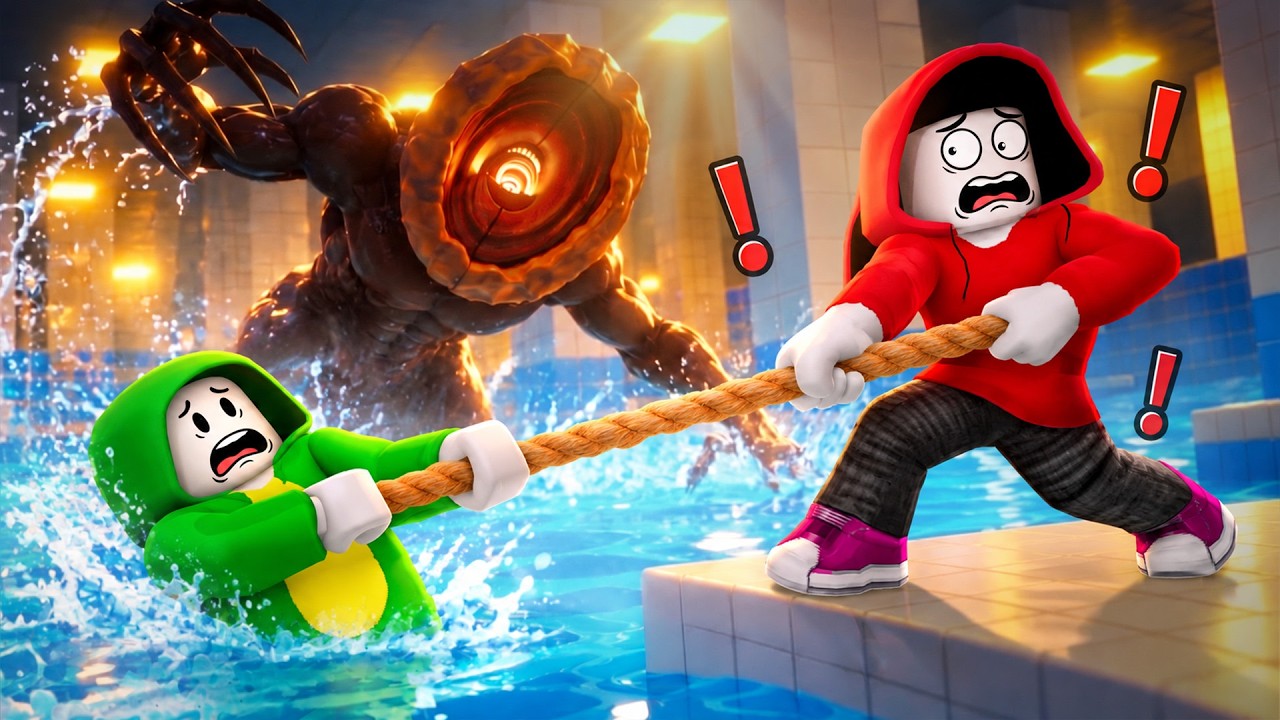
IT is the named water-dwelling creature in DONT SPLASH. The supplied game and wiki evidence describes it as blind: it does not use normal visual tracking to find an avatar. Instead, it patrols below the water and investigates the location of a splash or other relevant water disturbance.
That makes this a sound-based threat rather than a line-of-sight enemy. A monster in front of you is not automatically a detection, while a loud landing behind you can start a charge. Headphones may help you notice movement or warning sounds, but those cues should not be treated as an exact distance measurement.
The useful states to read are:
- Patrol: IT moves through the area without pursuing a visible player.
- Charge: after detecting a splash, it heads toward the disturbance's location.
- Reset: after the pursuit ends, it returns to its normal behavior; the exact reset timing can vary by stage and situation.
The charge is directed at the sound source, not guaranteed to be the player's current position. That distinction gives you a route decision: make the disturbance somewhere you do not need to cross, then move along the opposite dry edge.
What counts as a splash?
Treat the following actions as possible detection events rather than assuming only a full fall into the water is dangerous:
| Event | Why it matters | Safer choice |
|---|---|---|
| Entering or falling into water | Creates the clearest signal and can expose the route you are trying to use. | Wait for a fully dry landing before moving on. |
| Clipping the surface during a jump | You can be heard before your feet reach the water, so a near miss can still become a chase. | Aim for the center of the dry platform, not its water-side edge. |
| Landing on a dry platform | A normal dry landing is generally quieter than water contact. | Prefer a controlled dry route even when it takes longer. |
| Throwing an object into water | The thrown object can create a remote signal that redirects IT. | Use the signal deliberately and keep the throw away from your escape route. |
The important distinction for a dont splash horror roblox run is not whether IT can see you. Ask whether your jump, landing, or thrown item produced water noise, and whether the monster can investigate that location before you reach the next platform. The exact collision distance, fixed movement speed, and a universal splash radius are not documented in the supplied evidence, so do not plan around an unverified number.
Understand how Monsters hear splashes
This moment supports the detection rule described here: the monsters are blind and investigate water splashes by sound.
How to use Pebbles as a distraction
Pebbles are the most precise documented way to redirect IT. You can pick one up during a course or obtain it through the Equipment/shop systems described by the available guides. Use it as a route tool, not as a weapon.
Throw a Pebble to distract the monster
This demonstrated throw supports the Pebble route: send the distraction into water so IT investigates away from the path you need.

- Choose the escape side first. Know which dry platforms or exit direction you intend to use before throwing.
- Create separation. Throw the Pebble into water that is far from both your position and the route you still need.
- Watch the turn. Wait until IT clearly begins moving toward the new splash instead of moving immediately after the throw.
- Cross from the opposite direction. Use the gap while the monster is investigating the decoy location.
- Do not chain unsafe throws. A second splash close to you can pull IT back across your intended path.
The same logic applies to a Flare or other noisy distraction when that equipment is available, but the supplied evidence does not establish a universal radius, duration, or landing behavior for those items. Use the current in-game result rather than assuming that every distraction works like a Pebble.
Route decisions during a chase
When IT has already reacted, do not try to solve the encounter by simply running in a straight line. First identify where the last splash occurred. If that location is away from the exit, let the charge pull IT away and take a dry route around it. If the disturbance was near your intended crossing, pause and wait for the charge path to clear rather than making another panic jump.
For platform sections, use these priorities:
- Before jumping: check that the complete landing area is dry. Water-side corners and midair surface clips are failure risks.
- During patrol: observe IT's direction and use its rear or a wider lateral gap when the stage permits it.
- After a splash: avoid crossing immediately through the investigation area; move only after you can see the route is clear.
- In multiplayer: communicate who will throw the Pebble and who will cross. Any player's splash can change the monster's investigation direction.
- After capture or a failed attempt: use available rescue, checkpoint, or retry systems to recover, but do not expect them to change IT's detection rule.
Some video evidence mentions rooms with multiple Monsters or settings that can increase the number of monsters. The exact maximum and per-difficulty spawn table are not reliably documented here, so treat each additional creature as another possible investigation path rather than assuming a fixed count.
What is not documented
The supplied evidence identifies IT's behavior and the practical Pebble route, but it does not verify a health bar, a reliable attack method, fixed movement speed, fixed collision distance, or different numeric behavior for each appearance. This is why the best dont splash roblox horror game strategy is avoidance and sound management, not combat or a memorized timer.
If a future update changes the monster's visuals, patrol routes, or equipment behavior, confirm the current in-game prompt and result before relying on an older route. The core decision remains the same: keep water disturbances away from the path you need, and make any deliberate splash work in your favor.